Signs of Solopreneur Burnout Nobody Talks About

I moved to my couch in the middle of a Tuesday afternoon.
Not sick. Not tired in the way you feel after a long day. Just completely, utterly unable to sit at my desk anymore. My task list was open on my laptop. Clients were happy. The business was running. On paper, everything was fine.
But something in me had just stopped.
I sat there for a long time. If you had walked in and asked me what was wrong, I genuinely could not have told you. I didn't have words for it yet. What I didn't know in that moment is that what I was experiencing has a real, documented, physiological name. And my disorganized business backend was the primary reason it kept happening.
That feeling has a name. It's called the freeze response. And if you've ever had a version of that Tuesday, this post is for you.
What the Freeze Response Actually Is
Most of us have heard of fight or flight. That activated, heart-racing response your nervous system kicks into when it perceives a threat. But there is a third response that doesn't get nearly enough airtime, especially in conversations about solopreneur burnout.
The freeze response is governed by the oldest, deepest part of your autonomic nervous system. When your system has been in high alert for too long, or when low-grade stress has been running in the background day after day without relief, your nervous system makes a different calculation. It decides that the most protective thing it can do is shut down.
Not dramatically. Not in a way anyone else would necessarily notice. Just a quiet pulling of the plug. A stillness that feels like paralysis. A brain that will not cooperate no matter how many times you tell it to just start something, anything.
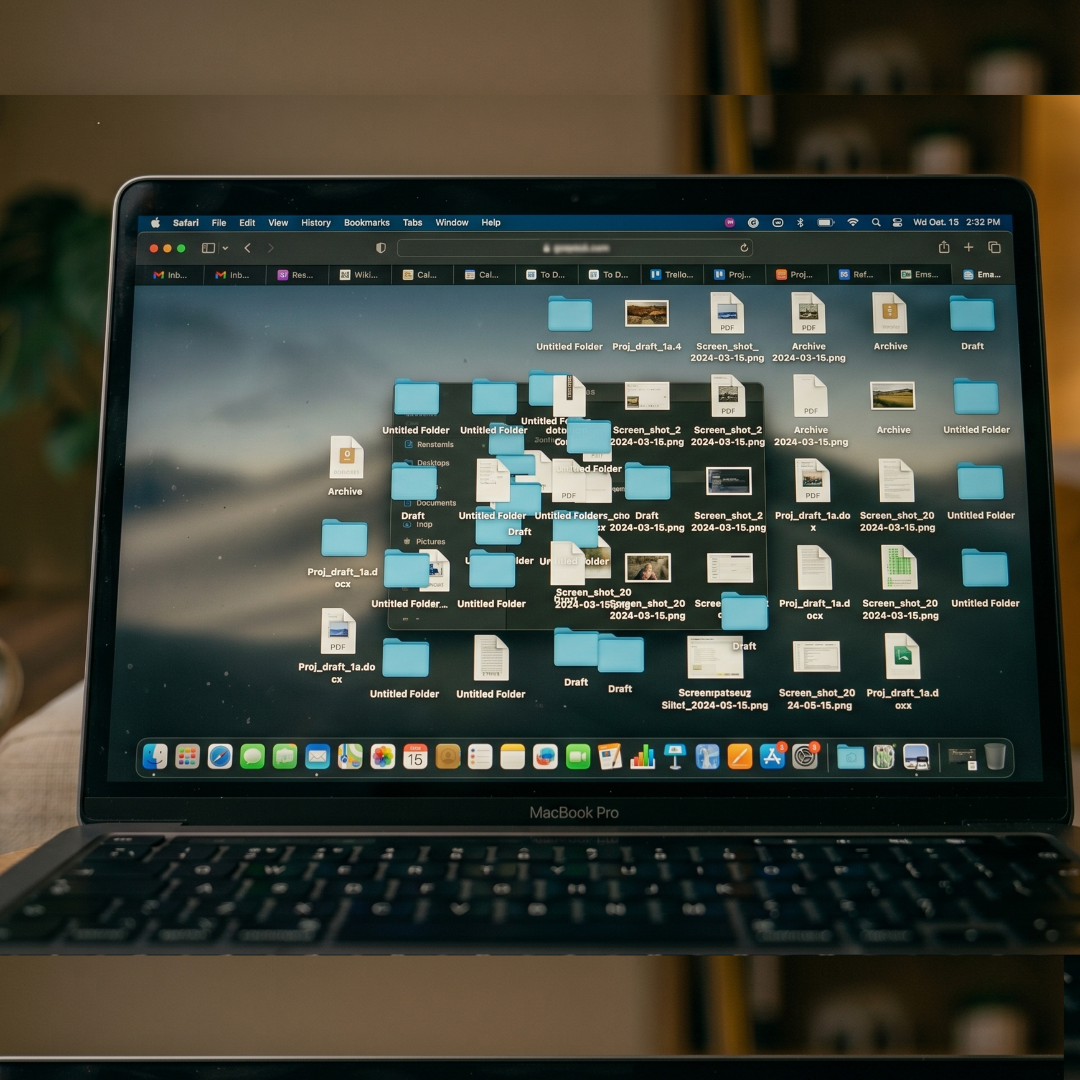
That is not laziness. That is your nervous system doing exactly what it was designed to do. The problem is it cannot tell the difference between a genuine emergency and a chaotic Google Drive with 400 unorganized files and an inbox that hasn't been touched in three days. To your nervous system, chronic digital chaos registers as chronic threat. And chronic threat, over time, leads to shutdown.

Four Signs It's Happening to You Right Now
The freeze response doesn't always look like lying on your couch unable to move. Sometimes it's much quieter than that. Here are the four signs I see most often in the soulpreneurs I work with.
Productive procrastination. You are busy. You are doing things. But none of the things you are doing are the things that actually matter. Reorganizing your desktop instead of writing that email. Color-coding a spreadsheet instead of finishing the proposal. Staying busy to avoid the thing your brain has decided feels too big to start.
Decision paralysis. You open your task list and instead of knowing what to do next, you just stare at it. Everything feels equally urgent and equally impossible. You spend forty-five minutes deciding what to work on and then your window of focus is gone.
The afternoon wall. Not just an afternoon slump. A real wall where by two or three o'clock, no matter how much sleep you got, your brain simply will not cooperate anymore. It has been doing invisible stress work all day and it is done.
Sunday dread that bleeds into Monday morning paralysis. Instead of coming to your desk ready to work, you sit down and immediately feel the weight of everything waiting. Your nervous system, before you have even checked a single email, is already braced for the chaos it knows is coming.
If any of those felt uncomfortably familiar, that is not a coincidence. That is information.
Why Your Business Backend Is Part of the Problem
Here's the connection almost nobody is making.
Research from UC Irvine tells us that after each interruption or task-switch, it takes an average of 23 minutes to fully return to a focused state. So if you are opening your laptop and spending the first twenty minutes looking for a file, then getting pulled into an overwhelming inbox, then trying to remember where you left off on a project, your brain never actually settles. It is always in recovery mode.
Over days, over weeks, over months of working inside that kind of environment, your nervous system accumulates that stress. It doesn't reset at the end of the workday. It builds. And eventually it hits a threshold. And on a Tuesday afternoon, you find yourself on the couch, staring at your laptop from across the room, completely unable to begin.
That is not a character flaw. That is a logical outcome of an unsustainable environment. And it means the signs you need better systems and the signs of nervous system burnout are often pointing at exactly the same thing.
What Actually Helps (And It's Simpler Than You Think)
You cannot think your way out of a freeze response. Your prefrontal cortex, the part of your brain responsible for planning and decisions, goes partially offline when your nervous system is activated. Which is why telling yourself to just focus or just start doesn't work. You are trying to use a tool that is currently unavailable.
What does work is addressing both sides at the same time. The internal state and the external environment. Because they are in a direct relationship with each other.
On the internal side, when you notice the freeze starting, the single most effective thing you can do is a physiological sigh. Two quick inhales through the nose followed by one long slow exhale through the mouth. It activates your parasympathetic nervous system and signals to your body that the threat has passed. Thirty seconds. You can do it before you open a single tab.
On the external side, the most impactful thing you can do for your nervous system is give your business a predictable, trusted structure. When your files have consistent homes, when your tasks live in one place instead of scattered across six apps and three sticky notes, when you can find what you need in thirty seconds, your nervous system stops scanning for threat every time you open your laptop.
One of my clients, a health coach who had been running her business for two years in complete backend chaos, told me three weeks after we worked together that she had sat down at her desk on a Monday morning and realized she was not dreading it. She said it quietly, like she was almost afraid to believe it: I'm not scared of my inbox anymore.
That is what this work actually does.

That Tuesday on my couch eventually became something. That frozen afternoon, that complete inability to move, turned into the clearest picture I'd ever had of what soulpreneurs actually need. And it became the foundation of everything I teach inside Strategic Blueprint.
If you are in your own couch moment right now, if you are sitting with a quiet overwhelm you cannot quite explain, what you are experiencing is not the end of your business story. It is information. Your nervous system is telling you something important.
And if you want to start by understanding exactly where the friction is coming from, the Sacred Systems Audit will show you. Five core areas of your business backend and your nervous system, assessed in about ten minutes, so you know exactly where to aim first.
Listen to what your body is telling you. Then come build something that lets it finally rest.
Stay gold 💫
~Diane